Before the first hard freeze: winterizing your sprinklers
Water left in irrigation lines freezes, expands, and splits pipe and valves. Here is what a proper blowout covers, and what to ask whoever does it.
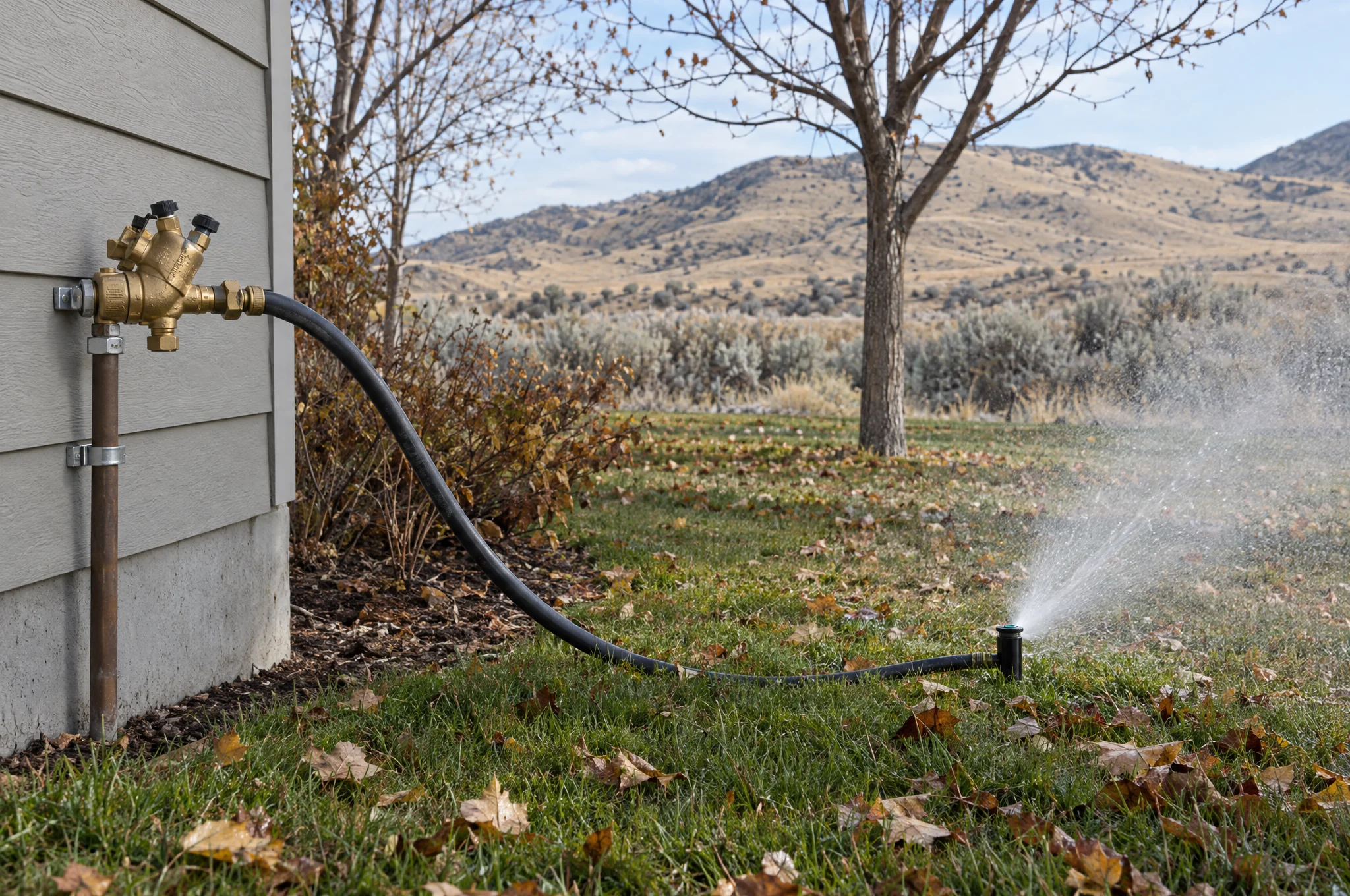
Every spring, someone in the Valley turns their sprinklers back on and finds a geyser in the side yard. Almost always the cause is the same: water left in the lines over winter froze, expanded, and split a pipe, a valve, or the backflow preventer. Winterizing is cheap insurance against that.
When to do it
Before the first hard freeze, not after. Treasure Valley nights can drop below freezing well before the days stop feeling like fall, so book the blowout once you are done watering for the year rather than waiting for a cold snap to remind you. Most lawns need little water once days shorten and temperatures fall.
What a proper blowout covers
- Shut the water off to the system at the irrigation shutoff, so nothing refills the lines.
- Clear each zone with compressed air, one at a time, until the heads mist instead of spray. A compressor that moves enough air matters more than raw pressure; too much pressure can damage pipe and heads.
- Protect the backflow preventer. It is usually the most exposed and most expensive part of the system. It should be drained, with its valves left in the position the manufacturer specifies, and insulated if it sits above ground.
- Put the controller in off or rain mode so it does not try to run zones through the winter.
Why we don't recommend doing it yourself
Air in an irrigation line is stored energy. A small shop compressor often can't clear a zone fully, and cranking up the pressure to compensate is how fittings crack. Blowing air through the backflow preventer the wrong way can damage it too. A crew with the right compressor clears a typical home in well under an hour.
What to ask whoever does it
- Will you clear every zone until it runs dry, not just once through?
- How do you protect the backflow preventer, and will you insulate it?
- If something is already leaking or broken, will you tell me before you fix it, and at what price?
The last question matters most. A good firm finds problems on the blowout and quotes them; it doesn't fix them first and bill you after.